The journal.
Things I notice. Things I am still learning.
Opening the journal…
Things I notice. Things I am still learning.
Opening the journal…
Opening the note…
Jun 18, 2023 / Roasting / 10 min read
A machine on the back porch, a temperature probe, a stopwatch and my ears. Roasting is the same job I do all day: keep a curve decelerating without letting it stall.
Boulder, Colorado, June 2023
By Sayonsom Chanda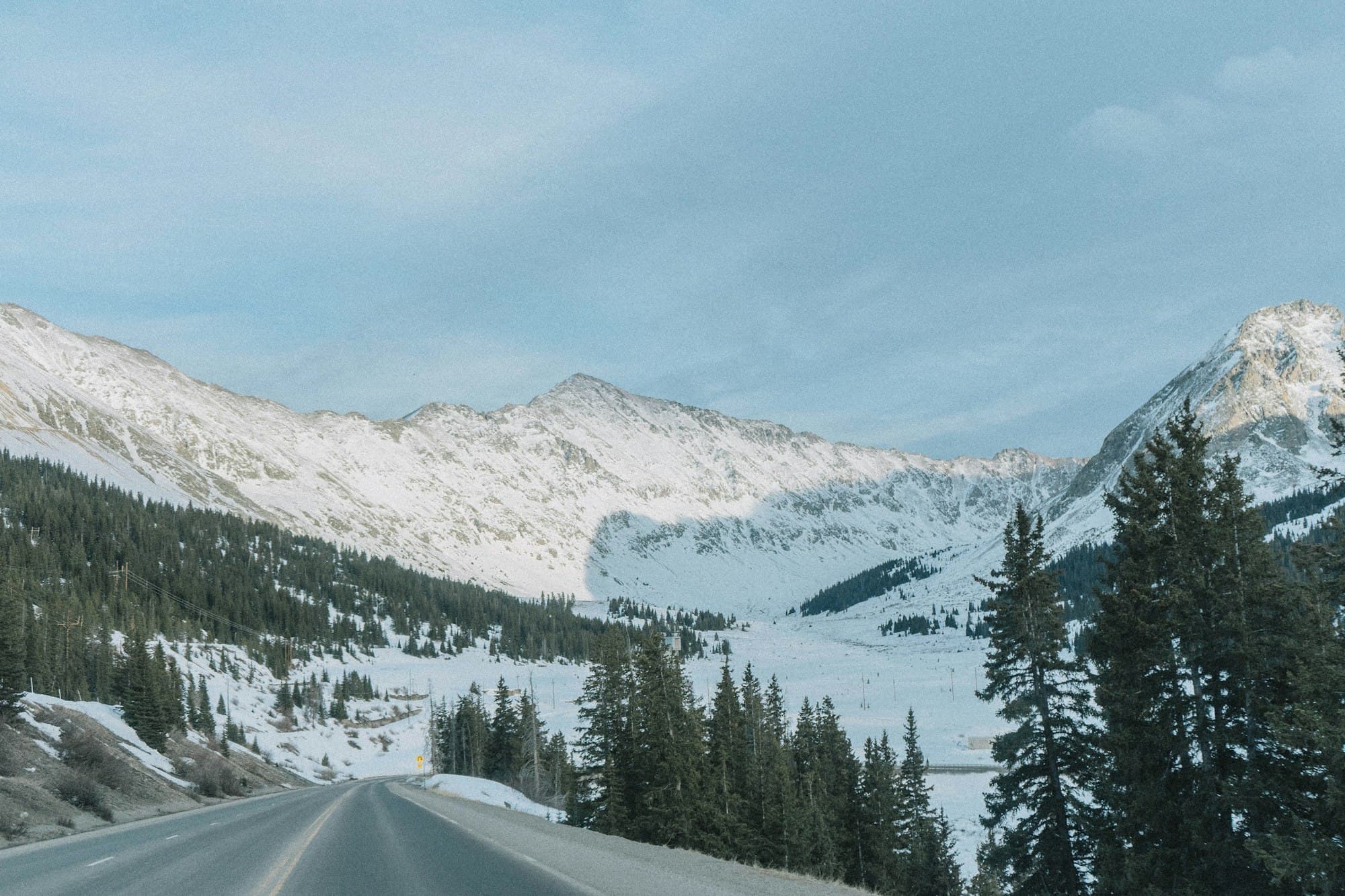
I spend my working days on systems whose state you cannot see until you measure it, and measuring it changes it. Then I go home, put a small bag of green Ethiopian beans into a machine on the back porch, and stand in the long June evening with a temperature probe in one hand, a stopwatch in the other, and my ears doing the rest. It turns out to be the same job.
This is the summer we decided to go home. Not this month, and not next, but the decision is made, and my wife and I have started to treat the year ahead the way a quartermaster treats a campaign: what ships, what sells, what school, what visa, what date, all of it on a whiteboard in the kitchen in three colours of marker. There is a baby of seven months who does not sleep and a boy of four who does not stop, and a job at the laboratory that I still like, and the nights, after everyone is down, are for reading about a subject I have fallen into sideways, which is how you compute with quantum machines, and how you might use them for the electricity grid. I have started writing about it. Small pieces, and a longer thing that might be a book. It is the first writing I have finished in years, and I think the reason is that I stopped waiting to have read enough first. In the same notebook there is a sketch of something else, a single map of every piece of energy data India produces, which would one day become the India Energy Atlas, though this summer it is a pencil drawing and a hope.
Roasting fits into this because it is the one hobby I have that gets better when I treat it like work.
Should you roast your own coffee, and what are you actually doing when you do?
Here is my answer in one sentence. You are running an open-loop thermal process, one batch at a time, with an audible checkpoint in the middle and a curve you are trying to keep slowing down without letting it stop. If that sentence makes you happy, you should roast. If it makes you tired, buy from someone who is happy, and there is no shame in it.
A green coffee bean is a dense little store of carbohydrate, protein, fat and acid, hard as a pebble and pale as a pistachio. About half of it is carbohydrate, and a portion of that is sugar, which is where sweetness and caramel and much of the acidity will come from. There is a small amount of caffeine, which barely changes through the roast, and a good deal of a bitter-tasting acid, which does.
Brew green coffee and you get a thin, grassy, faintly sour liquid that tastes like the water from a vase of flowers. Roasting is the only way the bean becomes something water can pull flavour from.
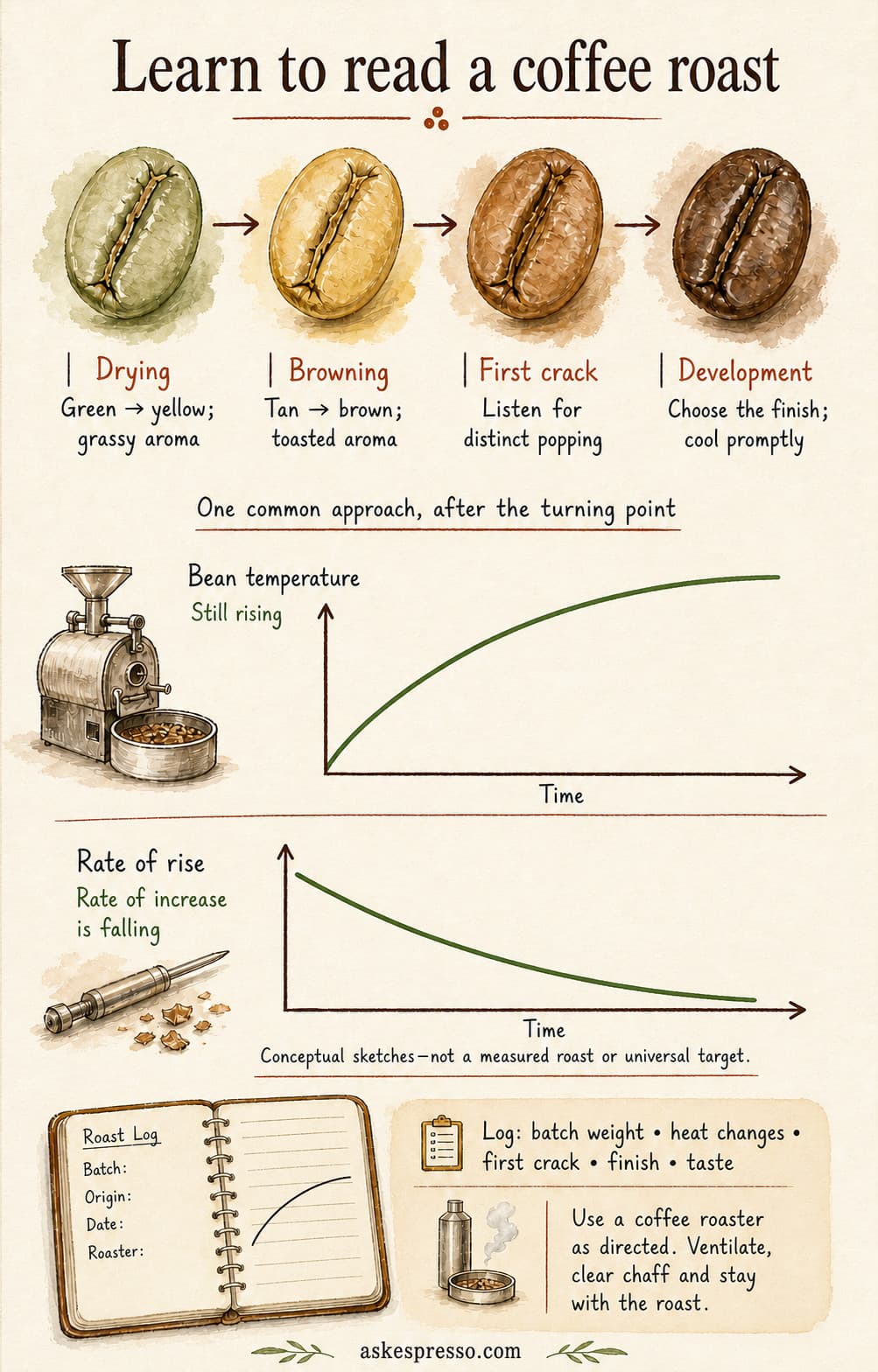
Drying. Moisture leaves the bean. Water content drops from about a tenth of the weight to a few percent, over the first several minutes. It smells of stale popcorn, wet hay and cold toast, and nobody tells you this part. The idea that a roastery smells wonderful throughout is a myth. It smells wonderful at the end, and it smells like a laundry room in between.
Browning. Above a certain temperature, the sugars and the amino acids begin to react with each other, and the bean turns from pale to tan to the brown of a walnut shell. This is where most of the flavour is made. Caramelisation follows, and it releases water and gas inside the bean, which builds pressure like a kettle with the lid on.
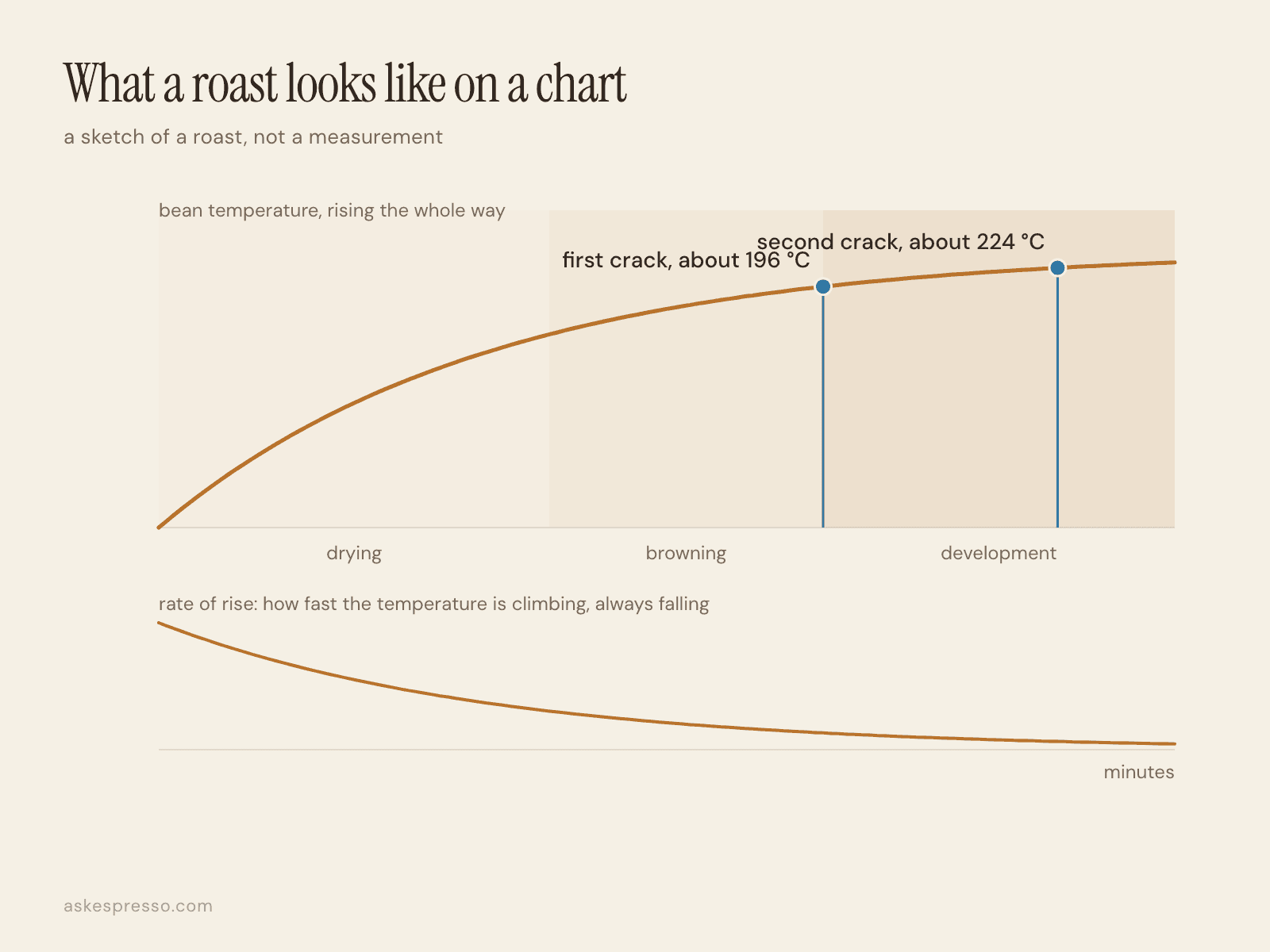
First crack. The pressure ruptures the cell walls, and you hear it: a sound like twigs snapping under a boot, or like popcorn in the microwave in the first slow seconds before it all goes at once. In a drum roaster it comes somewhere between seven and nine minutes in, and it lasts a minute or two. The bean jumps in size. And for a moment the roast turns exothermic: the bean gives out heat instead of absorbing it, which is why the process can run away here, or stall. This is the single most important moment to anticipate, and I still get it wrong one time in five.
Development. After first crack the coffee is drinkable. From here, acidity falls steadily, bitterness rises faster and faster, and body and sweetness rise, level off, and then fall. Where you stop decides everything.
Second crack comes a few minutes later, quieter, a crackle like a vinyl record between songs, with almost no water left in the bean. Beyond it the woody structure of the bean itself begins to break down, and you get smoke, char and nut, and the bean grows fragile and oily, its surface going from matte to glossy like a wet pebble. Keep going and the roaster catches fire. This is not a figure of speech. It is why you never leave one alone.
By the end, the beans have nearly doubled in size, lost a fifth of their weight, and halved in density.
The temperature of the bean should always be climbing. But the speed of the climb should be falling, all the way through.
Think of a car that is still moving forward but always slowing down, coasting up to a red light. The reason is the inside of the bean. Heat gets to the centre slowly, so you push hard early to get the core moving, then ease off so the outside does not race ahead of the inside. A coffee tastes right when it is the same colour inside as out, like a well-baked loaf.
Record the curve. A cheap probe and a logging application cost almost nothing and change everything, because you cannot improve a process you cannot see. This is what I do at work with much larger machines, and I was slightly embarrassed to find that a bag of beans wanted the same treatment.
There is a conventional measure for the last phase: the time after first crack as a share of the whole roast. The man who popularised it found that most of the coffees he loved sat in a band of roughly a fifth to a quarter, and he is explicit that this is one indicator among many and not a target. Simpler still, a rule I use: aim for first crack at about four fifths of the way through, and stop soon after.
Just after first crack. Bright, fruity, all the character of the farm, and merciless about defects. Best for filter and the press. Nearly always too sharp for espresso, and, to be honest, too sharp for me.
Between the cracks. Where most specialty coffee lives.
Into or after second crack. Darker, more soluble, more bitter, less of the place it came from, and slick with the oils that have come up through the surface. Espresso blends live here, and so, historically, did all bad coffee, and so does the cup I love best. I aim just at the edge of second crack most evenings, when the beans have gone the brown of a conker and the first oils are showing, and I am not going to apologise for it.
This note is being written at altitude, so I looked into whether that matters, and it does.
A roasting-software company ran a test in which people at heights from sea level to well above this town ran the same profile on the same coffee in the same small roaster. The higher the roaster, the darker the result, on every profile, measured by instrument. The explanation from the people who ran it is that thin air carries less heat, so the machine works harder to hit the same exhaust temperature, and the beans take more of it. A roaster in Denver who moved his machine down from Alaska had to cut his batch size by nearly a fifth and retune the airflow.
There is a second claim you will read: that first crack comes earlier and quieter at altitude, because the bean needs less internal pressure to burst against thinner air. That is sound physics. I could not find a controlled study that isolates it, and the test above measured colour, not the timing of the crack. So I believe it, and I cannot prove it, and I want to be clear about the difference.
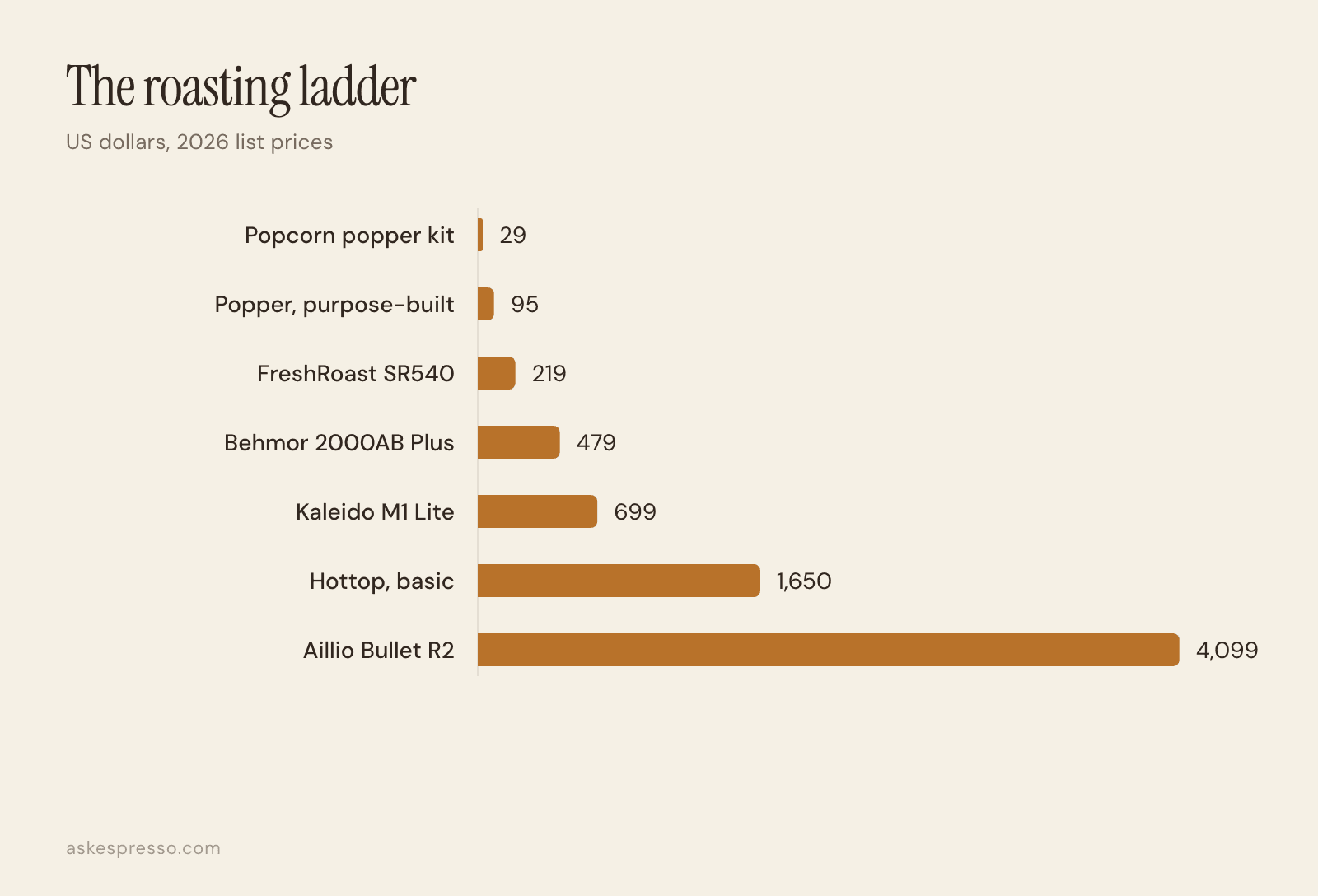
The bottom rung is a hot-air popcorn popper with a glass chimney and a plug-in meter so you can repeat the wattage. Then a purpose-built popper. Then the small fluid-bed roasters that most people buy as their first serious machine. Then a drum that takes a pound, then the first machine with a real profiling controller, which was recently cut in price and is now the cheapest way to draw the curve properly, and then the serious drum roasters, which cost what a good used car costs.
And then there is free. A wok and a heat gun, or a heavy cast-iron pan and a wooden spoon. Six to ten minutes, a great deal of chaff blowing about like ash from a bonfire, and inconsistent results until you learn to keep the beans moving every second. This is how most home roasters in India start, for reasons that are coming.
In the United States, buying green coffee for the home is easy. Several retailers sell it by the pound with tasting notes and scores, in bags small enough for a hobby.
In India there is nothing like that. When I looked ahead to the kitchen I will have next year, I checked every specialty roaster I could name, ten of them, and none sells roasting-grade green coffee in retail bags. The online listings for green coffee beans are mostly the weight-loss supplement, which is a different product. What Indian home roasters actually do is buy through wholesale trade portals, in sacks of ten kilos and up, with no cupping data, or write directly to an estate in Karnataka and buy a sack.
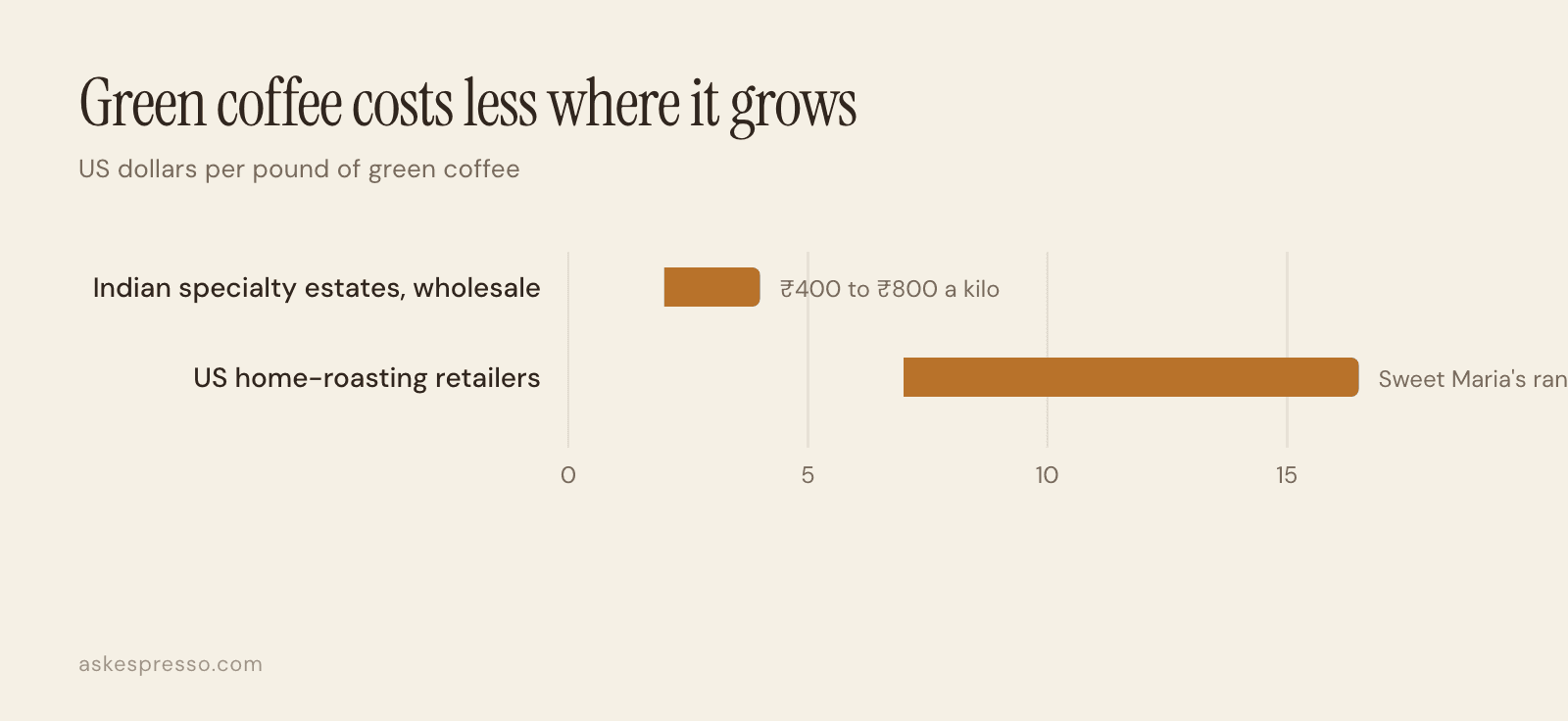
Here is the number that ought to annoy an Indian reader into doing something. Specialty-grade green coffee grown a couple of hundred kilometres from Bengaluru sells wholesale at a third to a half of what a hobbyist pays in the United States, and there is no curated, cupped, small-bag retail channel for it. Somebody should build that. I am writing this down partly so that I remember I said it, and partly because I have a habit, which the energy atlas also came out of, of writing down the things nobody has built yet.
Preheat the roaster properly. Respect the batch size: too little scorches, too much stalls into wood and smoke. Ventilate, because roasting makes a great deal of smoke, and your neighbours will think something is on fire. Empty the chaff, because it is a fire risk. Never walk away. Cool the beans fast; you should be able to hold them within a few minutes, warm as a stone in the sun. Then bag them and let them rest for at least half a day before brewing, which is the subject of the next note.
The most widely used open-source program for computing the structure of materials, the kind of tool a chemist uses to work out how water minerals bind to coffee acids, is called Quantum ESPRESSO. The name is an acronym and also a joke, and the chemist in the water note uses exactly that class of tool. The loop closes.
And an entire branch of quantum computing began over a cup. A physicist at a university in California remembers that on the first day a new colleague arrived, in the late nineties, they sat down for coffee and the colleague began describing an idea for building a computer out of exotic particles that remember how they have been braided. That conversation became a famous paper and then a field. One coffee. I think about that more than I should, on the porch, with the probe in one hand and the sky going the colour of apricots over the Flatirons.
The first ten batches will be bad and you will drink all of them. I did. They were thin, or scorched, or grassy, or fine for two days and then flat as a week-old soda.
The eleventh will be the first thing you have made with your hands in years that someone else asks you for. Mine was a small bag I gave to Rob, dark, right at the edge of second crack, and he drank it from the thermos and asked, a week later, without looking up from his screen, whether there was any more. There was not. There is now.
If you want one thing to do this morning, and you have a popcorn popper, put fifty grams of green coffee in it on the back step and listen for the first crack. You will know it when you hear it. You will not know what to do next, and neither did I, and that is the point.
Yes. A hot-air popcorn popper, a heavy pan, or a wok and a heat gun all work. Keep the beans moving the whole time, expect a lot of smoke and chaff, cool the beans quickly, and let them rest at least twelve hours before brewing.
The moment steam and gas burst the bean's cell walls, with a sound like snapping twigs, usually around 196 degrees Celsius and seven to nine minutes into a drum roast. The coffee is drinkable from here; how much longer you go decides the roast level.
Not from any of the specialty roasters, who do not sell green in retail bags. Home roasters buy wholesale sacks through trade portals or write directly to an estate in Karnataka. Beware online listings of green coffee that are the weight-loss supplement.
Thank you for spending a little time here.
Back to the journal ↗