The journal.
Things I notice. Things I am still learning.
Opening the journal…
Things I notice. Things I am still learning.
Opening the journal…
Opening the note…
Jul 19, 2020 / History / 10 min read
Stranded in Jaipur with a jar of instant coffee and a great deal of time, I read about coffee instead of drinking it. Five hundred years, a few lies, and a genome.
Jaipur, July 2020
By Sayonsom Chanda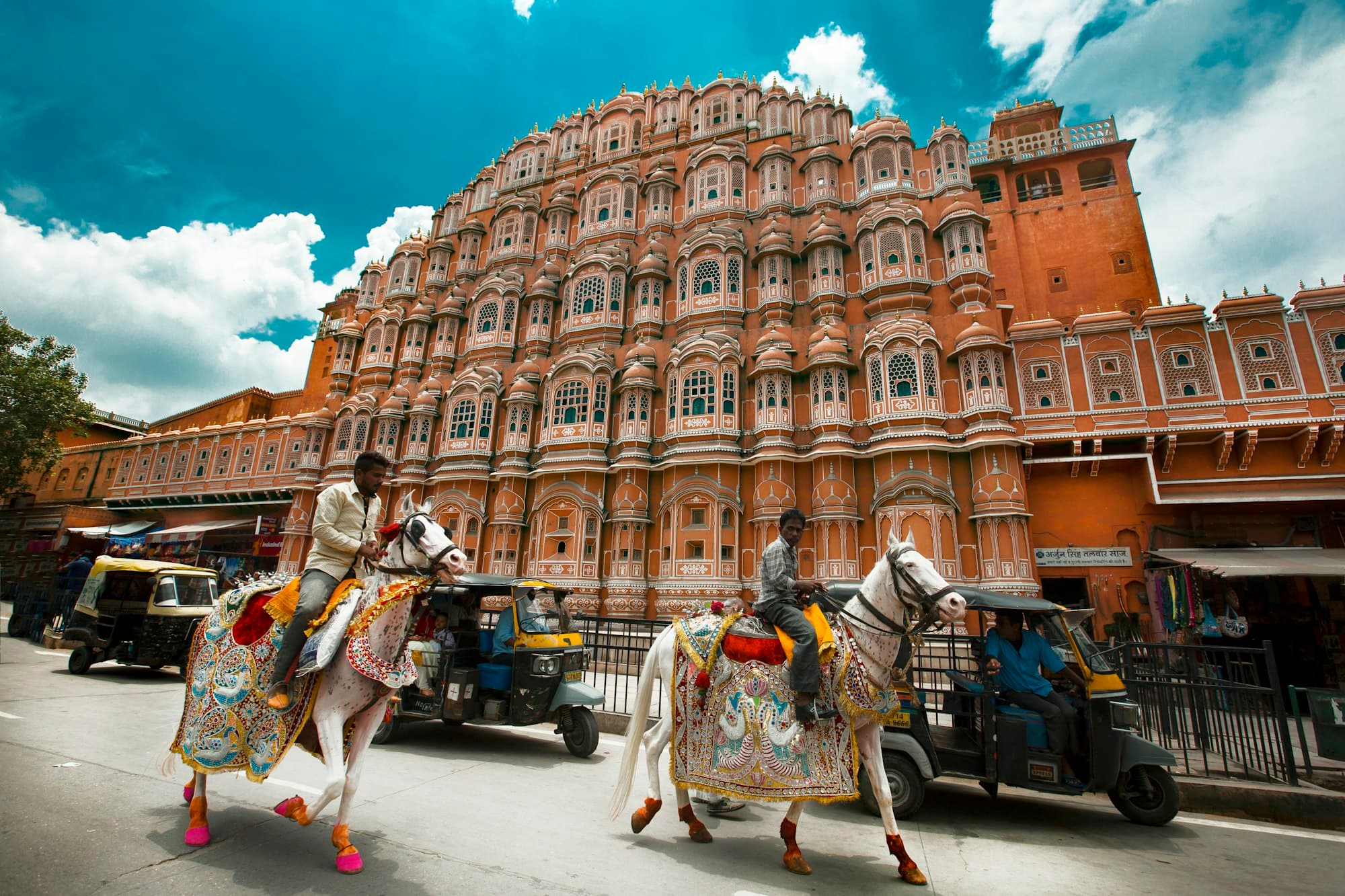
I am in Jaipur, and I was not supposed to be.
In March I flew out of the United States in the last week the border was open, and I may have been one of the last people to get into India before the flights stopped, and then they stopped, and it has been four months. My wife and our son are with me, and he will be two in the autumn, and he thinks a locked house with a courtyard is the finest thing that has ever been built. The house is not ours. It is pink like everything in this city, the pink of the inside of a shell, and by ten in the morning the walls are too hot to lean on. There is a jar of instant coffee on a shelf in the kitchen, and there is nothing else, and there is a great deal of time.
So I have been reading about coffee instead of drinking it. And I have been reading, full stop, more than I have in years, because the stack of books that followed me from apartment to apartment finally has my attention, since there is nothing else to give it to. Everyone I know is struggling with this year, and I feel guilty saying that I am not. I have a laptop that still works, a boy who wakes me by pulling my ear, and mornings that start with a book and a cup of something brown that tastes, honestly, like a memory of coffee described over a bad phone line. I do not know what the rest of this year holds. Right now it holds pages.
This note is what I found in them. It is a history, and like all coffee histories it is unruly, because half the stories are not true and some of the true ones are stranger than the lies.
Coffee grew wild in the highlands of southwestern Ethiopia, under a canopy of tall trees, and a version of it still does.
The plant in your cup, arabica, is a natural hybrid of two other coffee species. Last year a large group of geneticists sequenced it properly and dated the moment the two parents crossed. Their number is hundreds of thousands of years ago, long before there were people to notice. I have seen other numbers quoted in the press, some far larger, and I am using the one in the paper, because that is where numbers should come from.
So the coffee plant is an accident that happened in a forest, and nobody cultivated anything for most of its life.
Every history has the goatherd. Kaldi, an Ethiopian boy, notices his goats dancing after eating red berries, tries them himself, and the rest follows. There is also Omar, a holy man exiled outside the walls of a port in Yemen, who survives on the bitter fruit and is welcomed back as a healer.
Both stories were written down centuries after they supposedly happened, and both survive because they are charming and easy to add to, like a family story that gains a detail at every wedding. I am telling them as legends and I would ask you to repeat them the same way.
The useful fact is quieter. The Oromo people of the Kefa region were pressing coffee leaves and fruit into a chewable cake, greasy with animal fat, roughly two thousand years ago. Coffee was food before it was a drink, something to carry in a pocket on a long walk. That seems to be as far back as the evidence goes.
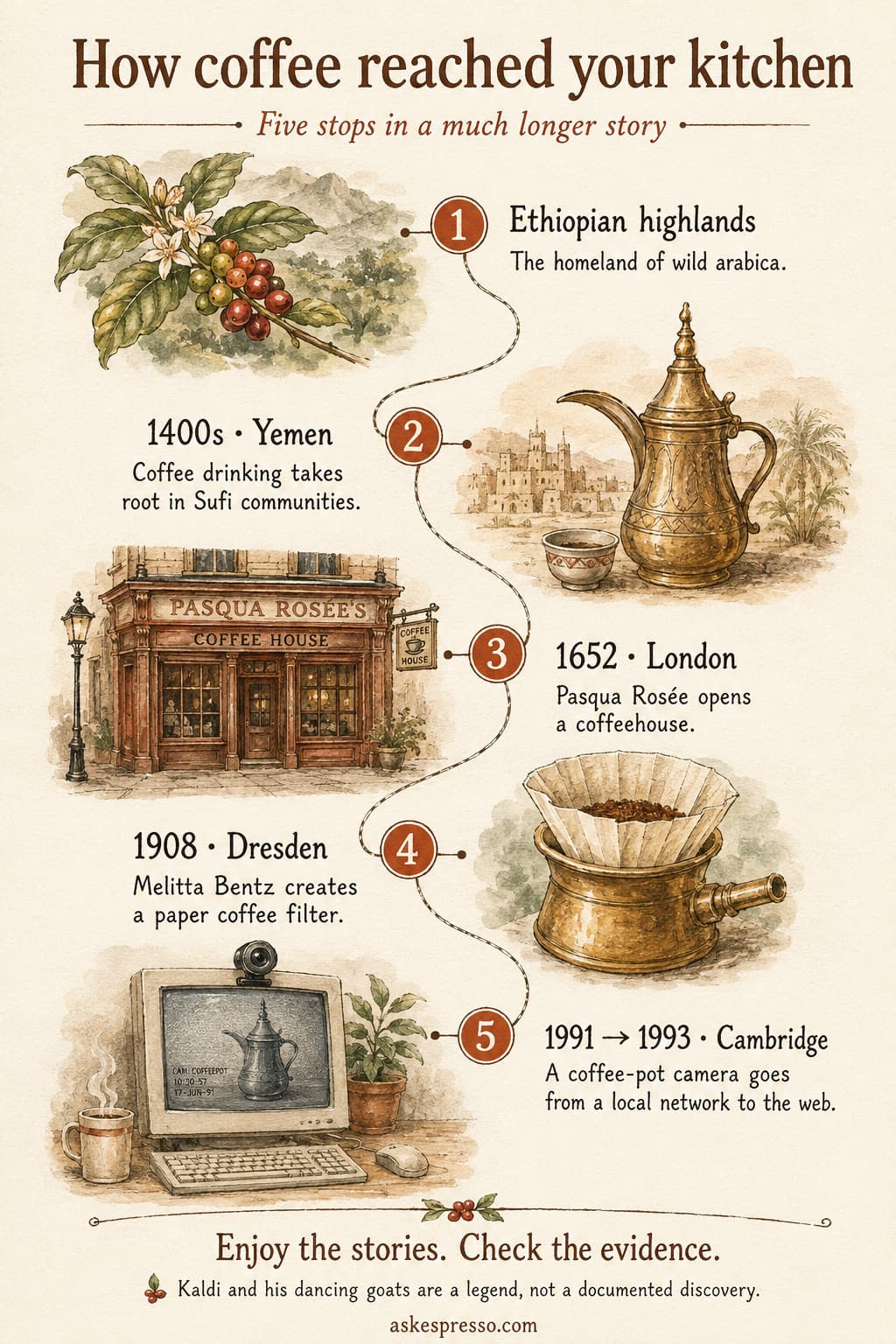
By the late fifteenth century, coffee was established among Sufi communities in Yemen, who drank it through nights of worship to stay awake, and I can picture the room, lamp-lit, the smell of the drink sharp in the cold before dawn. A scholar named Muhammad Ibn Said al-Dhabhani is credited with bringing it from Ethiopia. So coffee's first documented job was keeping people awake for prayer, which is not so far from its job in my kitchen.
And then there is the word. In Arabic, the word that became "coffee" already existed, and it was a poetic word for wine. The old dictionaries trace it to a root meaning to have no appetite. So here was a dark drink that took away hunger and carried the name of wine. You can see why it went to court.
I wrote about the bans in the first note, so I will keep it short here. Mecca early in the sixteenth century. Constantinople a generation later. Two sultans in the second half of that century, and a third, Murad IV, who shut the coffeehouses and drank coffee at home. By the middle of the seventeenth century, the punishment for a second offence in the Ottoman capital was to be sewn into a leather bag and thrown into the Bosphorus.
None of it was about the drink. It was about the room, and what people said in it when they were sober enough to remember.
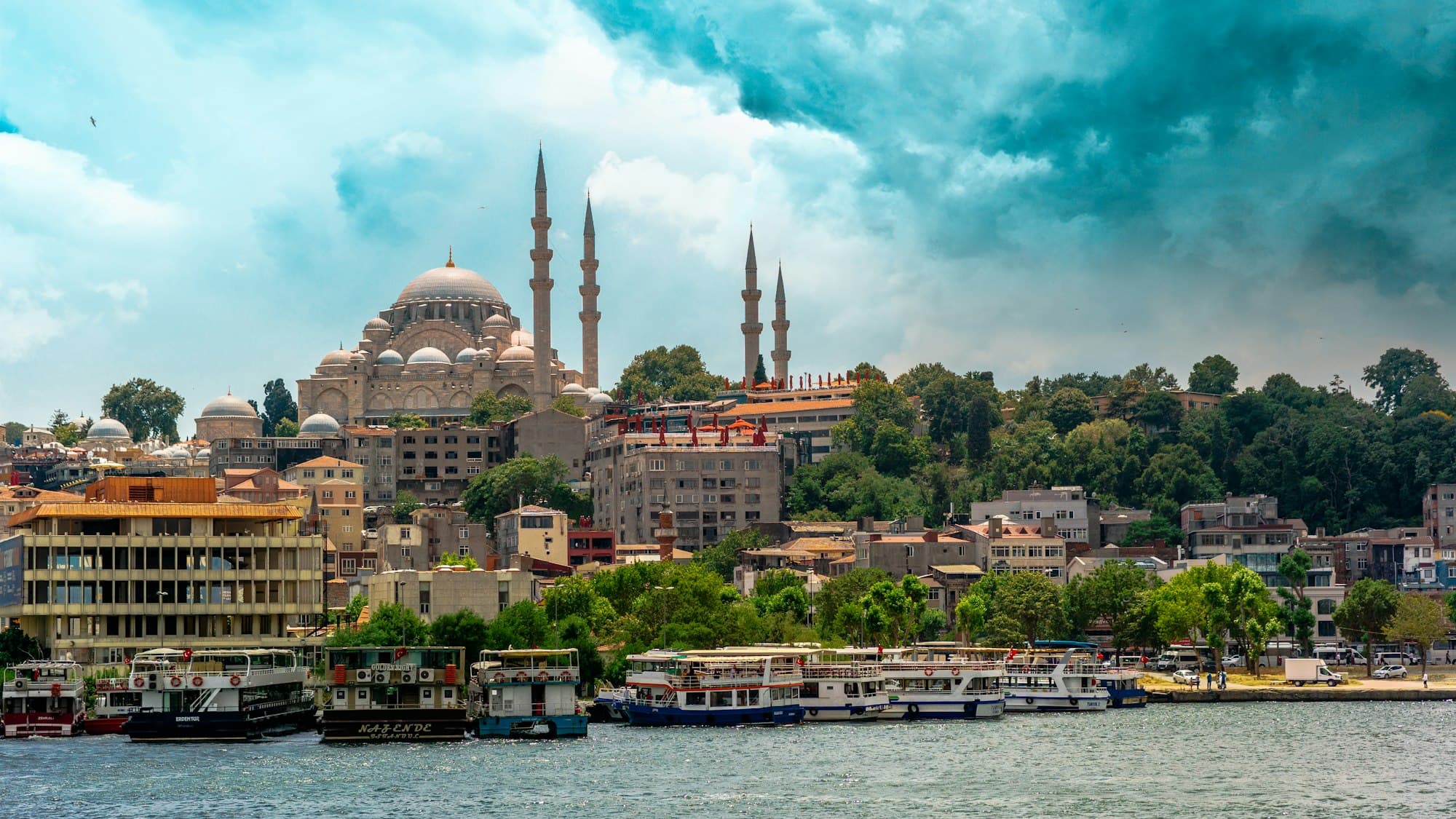
The book I finally read this year, in the pink house, in the heat, is Orhan Pamuk's My Name Is Red. I had owned it for a decade and carried it across two continents unopened. It is set in Istanbul at the end of the sixteenth century, a few decades after coffee arrived, and the coffeehouse is the novel's other institution, the place where the storyteller performs and the forbidden pictures are hung on the wall.
In one chapter a dog speaks, and the dog quotes a preacher who says that coffee is a sin, that the Prophet avoided it because it dulls the mind, and that coffeehouses are where idle men sit knee to knee. Then the dog, in his own voice, says the joke of the whole book: that men in these places get so drunk on coffee that they will listen to what a dog has to say. The accusation and the answer come out of the same mouth. Later the zealots raid the coffeehouse, smash it, and kill the storyteller. The murder mystery gets solved. The culture loses.
I looked for a quotation about coffee from Pamuk's long interview with a literary magazine, because several are passed around online with his name on them. There is none. The word appears once, in the interviewer's description of the room. What Pamuk does say there is better anyway: that for years he would say goodbye to his wife in the morning like a man going to work, walk around a few blocks, and come back to the house like a man arriving at the office. That is a coffeehouse argument without the word in it. It is also, I am ashamed to say, a description of the only kind of discipline I have ever managed as a writer, and I have managed it for about a week at a time, and this year, with nowhere to walk, I have managed it for longer.
An Italian doctor published the first drawing of the coffee plant in the last decade of the sixteenth century. The London coffeehouses followed in the sixteen fifties, and I have written about what they became. In Paris, a café opened near the end of the seventeenth century that would later seat Voltaire and Rousseau, and in the next century Franklin and Jefferson. In July of 1789, a young man stood on a table outside a different Paris café with a pistol in his hand and shouted for citizens to take up arms, and the Bastille fell two days later.
And the coffee itself was terrible. An English writer in 1661 called it boiled soot, and I believe him, because I have made boiled soot in my own kitchen more than once. Some recipes of the time suggested seasoning fresh water by boiling it first with old grounds, the way you might season a pan. Shops cleared their brew with egg white and fish bladder, so that it would shine in the cup like a varnished table.
Four hundred years of people loving a drink that they were making very badly. I find this the most reassuring fact in the whole history, and I am putting it here, near the middle, so that you carry it with you when your own cup goes wrong, as mine did this morning, with the jar.
For a long time, the Ottoman authorities would not let a living coffee seed leave their ports. Beans had to be scalded or parched before export so that they could not germinate, and the old accounts are explicit that the point was killing the seed. That is why every story of coffee escaping involves someone smuggling something alive against their skin.
The most famous is a French naval officer who, in 1720, carried a single seedling across the Atlantic to Martinique in a glass case on the deck, sharing his own water ration with the plant through storms and a shortage, a cupful at a time. Within a decade there were said to be millions of trees on the island. Almost all the coffee grown commercially in the Americas today can be traced to one tree that once stood in a greenhouse in Paris, breathing the same air as the king.
There is an Indian version of this story, and it is better, and it belongs in the last note of the series.
At the end of the nineteenth century a German chemist named Emil Fischer named the family of molecules that caffeine belongs to, and then built caffeine in the laboratory from scratch, atom by atom, like a model ship. A few years later he received the Nobel Prize in Chemistry, in part for that work. A Nobel was given, in part, for finding out what the molecule in your cup actually is.
In 1882, before the Brooklyn Bridge opened, a group of traders founded a coffee exchange in New York. Through a century of mergers it became part of the exchange that still sets the world price for arabica, in a contract that trades under the single letter C. Nearly all real coffee, everywhere, from the farm in Karnataka that I would one day buy from to the bag on your counter, is priced as some amount above or below that number.
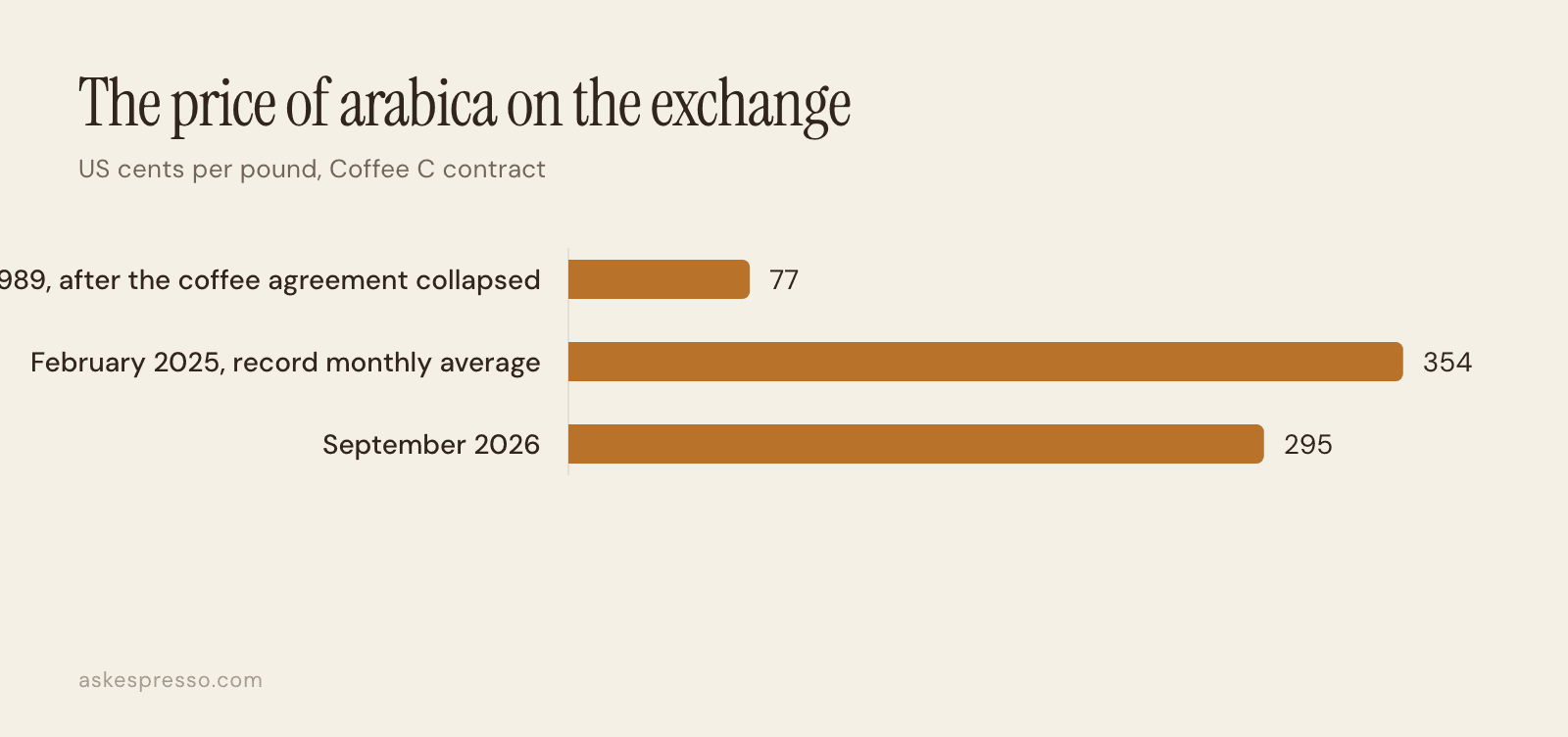
The number has had a wild life. When the international agreement that once steadied prices collapsed at the end of the eighties, the price fell below what it cost most farms to grow the coffee, and families walked away from their trees. Early last year it hit the highest monthly average ever recorded. As I write, it has come down from there, and the stocks of coffee held in the exchange's warehouses are the lowest in a generation. Cheap paper, scarce beans. What that does to the bag in your hand is a question for the note on buying.
Since I have had the time, I checked.
Coffee is not the second most traded commodity in the world after oil. The real statistic was narrower and older, about exports from developing countries in a particular period, and the writer who spread it has corrected himself in print, which is more than most of the internet has done.
Voltaire did not drink forty cups a day. There is no primary source of any kind. That he sat in a Paris café is well attested. The number is not.
Beethoven did not count sixty beans for every cup. The only source is a secretary who forged entries in Beethoven's notebooks after his death. Three of Beethoven's friends confirm that he made coffee at home and cared about it. None mentions counting.
The slogan about a coffee being good to the last drop was not said by Theodore Roosevelt. It was already in advertising before the day he is supposed to have said it, and the company that used it never claimed he did.
The most expensive coffee in the world, the one that passes through a civet, is not something you should buy. The price has produced caged animals fed fruit of any ripeness, and a large trade in fakes. I will not be gentle about this one, and I will not be gentle with anyone who serves it to me.
I never did find good coffee in Jaipur this year. The jar of instant is a little emptier, and I have learned to make it with hot milk and a pinch of cardamom, which turns it into a different drink that I do not have to be ashamed of. The books are a little more read.
What I found was what coffee is. A forest accident, a Sufi vigil, a word for wine, a room that frightened kings, a seedling on a ship, a molecule with a prize, a number on a screen. That turned out to be a more durable thing to have acquired than a good cup, and when the flights start again I will go and find the cup, and it will be dark, and I will drink it black.
Is there a version of this history that does not run through rooms full of people talking? I looked. I could not find one.
Arabica coffee grew wild in the highlands of southwestern Ethiopia. It is a natural hybrid of two other coffee species, and a 2024 genome study dates that hybrid to hundreds of thousands of years ago. People in the Kefa region ate it as a pressed cake long before anyone brewed it.
Nobody knows, and it was written down centuries after it supposedly happened. It is best told as a legend. The better-documented start is coffee in Yemen in the 1400s, where Sufi communities drank it to stay awake through night prayers.
No. The claim came from a garbled version of a narrower statistic about exports from developing countries between about 1970 and 2000, and the writer who spread it has corrected it in print.
Thank you for spending a little time here.
Back to the journal ↗