The journal.
Things I notice. Things I am still learning.
Opening the journal…
Things I notice. Things I am still learning.
Opening the journal…
Opening the note…
Apr 11, 2021 / Buying / 10 min read
Forty bags on a shelf, a friend on the phone from Bogotá, and a startup with weeks of money left. Five things on a bag predict whether you will like it. One beats the rest.
Birmingham, Alabama, April 2021
By Sayonsom Chanda
I am standing in a coffee shop in Homewood, a suburb of Birmingham, Alabama, in the first warm week of April, holding a bag of beans that costs eighteen dollars, and I am going to buy it.
This is indefensible. I have a company with three people in it, and we have money for a few more months if nothing goes wrong, and something always goes wrong. My son is two and a half and has opinions about breakfast that he expresses by throwing it. And yet I am not worried this spring, and I do not entirely know why. Maybe because the world reopened and I got out of that pink house. Maybe because a startup in its first year feels like those locked-down mornings in Jaipur: everything is still possible and nobody has told you otherwise yet. The dogwoods along the street are out, white as new paper, and the air smells of cut grass and warm asphalt, and I have a bag of coffee in my hand that smells, through the little valve, like dark chocolate and something floral I cannot name.
Julian is on the phone from Bogotá. He is a friend from my old life who grew up around coffee, and he is explaining why the bag says Nariño, and why that matters. I asked him a simple question, which was: there are forty bags on this shelf, which one? What follows is his answer, and then mine.
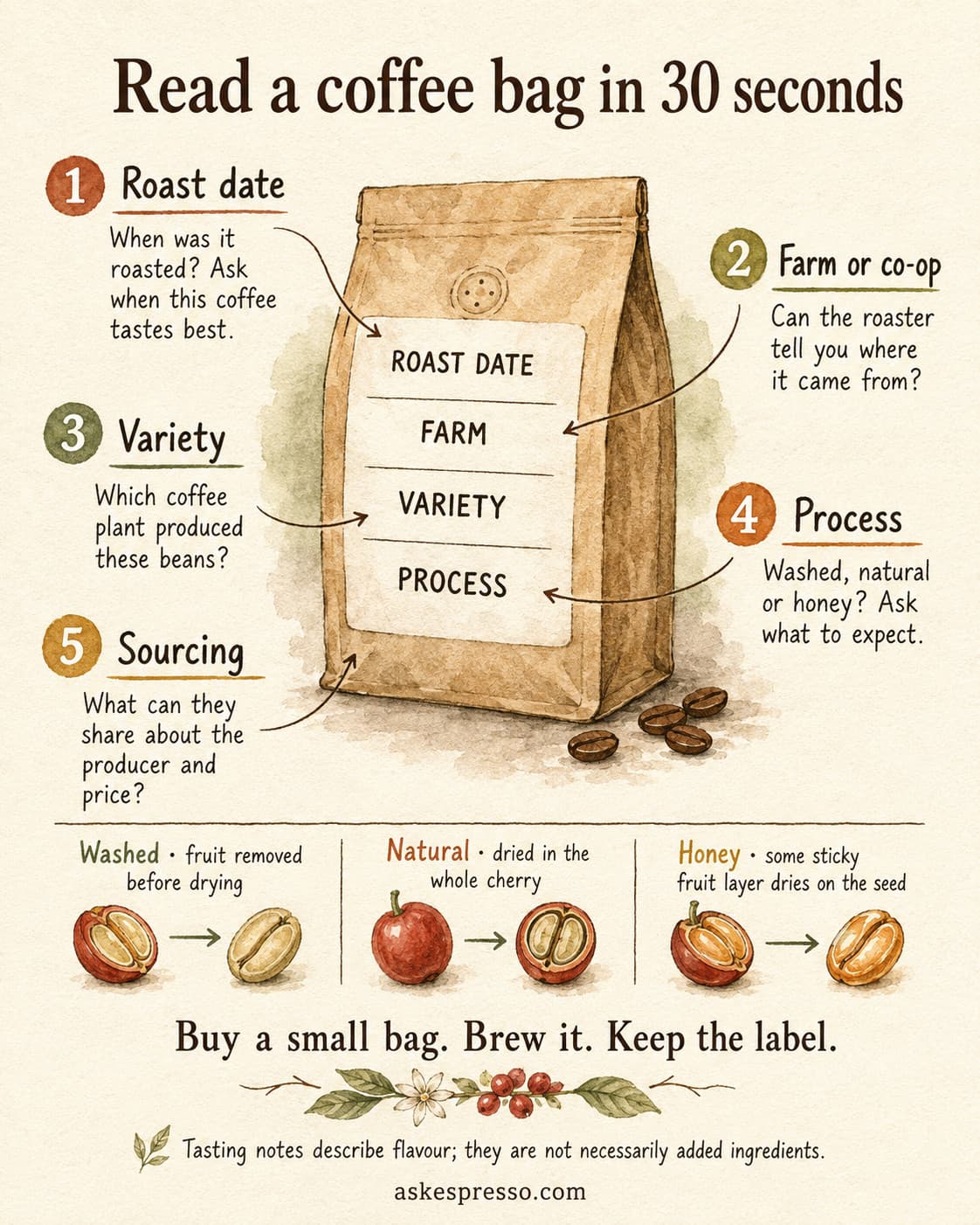
Look for a roast date.
I mean the day the coffee was roasted, printed on the bag, usually by hand in marker or stamped in a corner. A best-before date or a packing date is a different thing and tells you almost nothing. If a bag has no roast date, put it down, however beautiful the label. That single rule removes most of a supermarket aisle and about half of what is sold online, and it is the most reliable rule in this note.
Why does it matter so much? Because roasted coffee is a fresh food, like bread, and it has a window, and the window is shorter than anybody selling it would like to admit. For filter coffee the window opens a day or two after roasting and closes after a week or ten days. For espresso it opens a little later and closes a little later. Once a bag is open, you have a few days at the top of its form, however carefully you seal it. I have written a whole note about this, because it changed how I buy more than anything else in the series.
Nearly all the coffee in the world is one of two plants. Arabica is most of it and is where the flavour lives. Robusta is the rest: more caffeine, more resistant to disease, more yield per tree, a smaller bean and a rougher, rubberier taste, prized in Italian espresso blends for its thick crema and its punch, the way a pinch of salt is prized in caramel.
Most specialty coffee is arabica and does not bother to say so. Robusta has a poor reputation that it does not entirely deserve, and I say that as someone who has drunk a lot of bad robusta out of steel tumblers. Some very good robusta is being grown now, and a surprising amount of it comes from India, which is a story for the last note.
If species is red or white, variety is the grape. All arabica traces back to two old lines, Typica and Bourbon, and everything else is a mutation, a cross, or a selection from those, the way every dog is descended from a wolf and none of them look like one.
Julian, on the phone, with a motorbike going past behind him, ran through the ones worth knowing. Bourbon is the sweet, balanced parent of many others. Caturra is a compact Bourbon found in Brazil, which does well high up and poorly low down. Two selections from a Kenyan laboratory in the thirties are responsible for the blackcurrant taste in Kenyan coffee, that sharp purple flavour like the cordial you drank as a child. Gesha, a plant from a village in Ethiopia that made its name in Panama, tastes of tea and citrus and tropical fruit and sells for more than any other; not everyone likes it, and I am one of the ones who does not, because it is thin as a watercolour where I want oil paint. Then there is the whole family of rust-resistant varieties, bred with a little robusta in them, which used to taste compromised and increasingly do not.
Here is an honest caveat. Even in coffee-growing countries, only about a third of specialty bags name the variety. So do not treat its absence as a failure. Treat its presence as a sign that the roaster is paying attention.
This surprised me, and Julian was firm about it. How the fruit was removed from the seed changes the cup more than which country the seed came from.
Washed. The fruit is pulped off, the seed is fermented in tanks to loosen what remains, then washed and dried on raised beds in the sun. Clean, bright, transparent, like a window just cleaned. If you want to taste the place, this is the process that shows it. Kenya ferments twice with a wash in between, which is part of why Kenyan coffee is so vivid.
Natural. The whole fruit is dried intact, shrivelling to a dark raisin, and then the dry husk is removed. Heavy, fruity, wild, sometimes strange, like the smell of a fruit bowl a day past its best. Less consistent. Wonderful in an espresso blend for body, and I will confess that a dark-roasted natural, with its syrupy weight and its oils, is the cup I reach for most.
Honey. The fruit is pulped but some of the sticky layer is left on the seed while it dries. In between the other two. The Costa Ricans made this a national speciality and grade it by how much is left on.
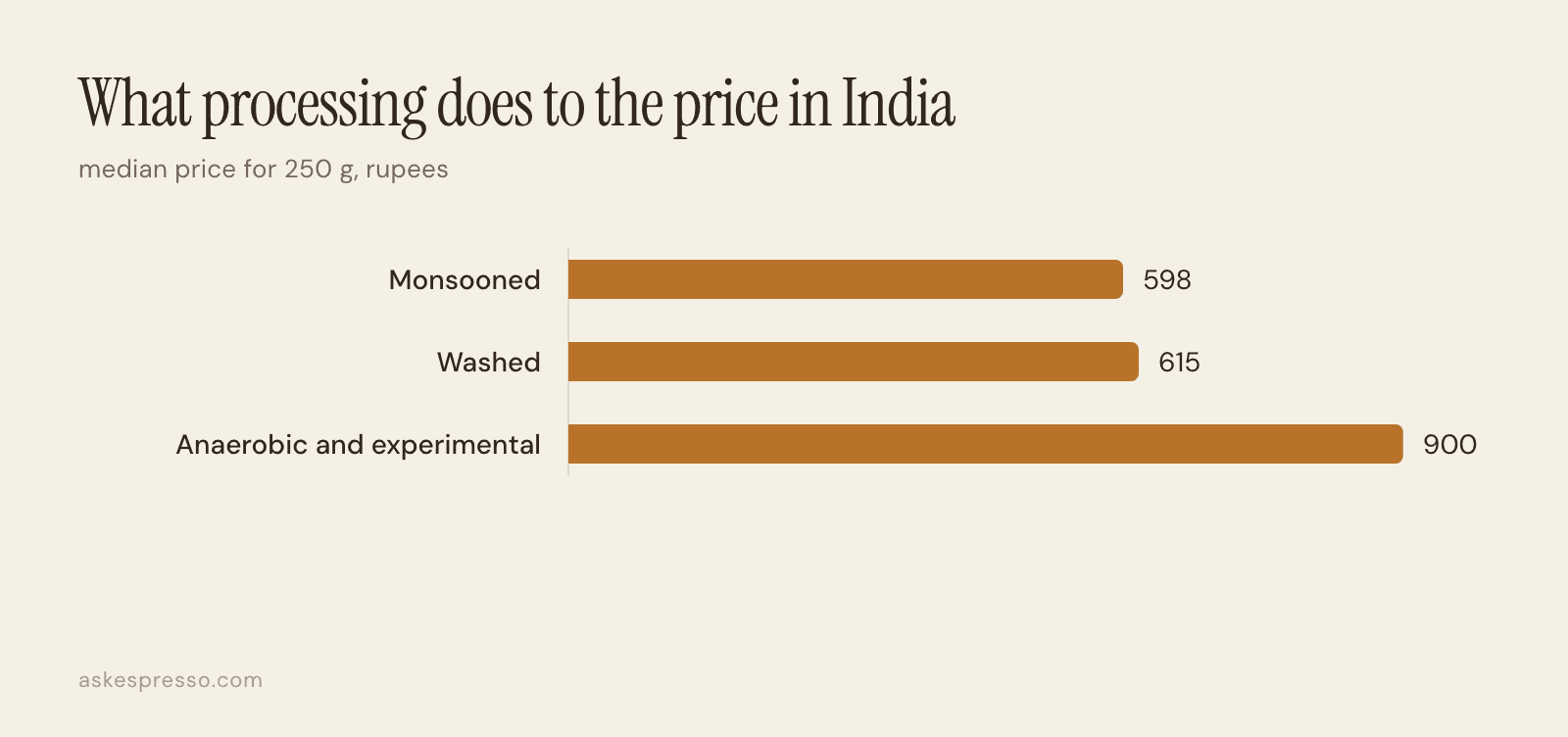
Anaerobic and experimental. Fermented in sealed tanks, sometimes with added fruit or yeast, so that the coffee comes out tasting of things coffee does not usually taste of. This is the current frontier and the current price premium.
Arabica likes to grow high, where the nights are cold. Higher means cooler, which means the fruit ripens slowly, which means a denser bean with more acidity and more to say. In one Central American country, a few hundred metres of altitude is worth several degrees of temperature. A bag that names its elevation is a bag whose roaster knows where the coffee came from, and that is what the number is really telling you.
From a roaster who prints a roast date and can tell you the farm, ideally one who roasts after you order, which is how I would come to do it myself, years later, in a kitchen in Bengaluru.
By subscription, if you drink coffee steadily. A subscription solves the freshness problem structurally. Careful shopping cannot solve it at all.
Directly, if you ever get the chance. Direct trade is not a farmer posting a sack to a roaster. It is transparency about who was paid what, with the miller and the exporter and the importer each named. It is better than the alternative, and it is not a certificate.
And about the certificates. Fair Trade, organic, and the rainforest labels each guarantee something real about how the coffee was farmed or traded. None of them guarantees anything about how it tastes. This is the single most useful correction I can make in this note, so I will make it plainly: a certificate on a bag tells you about the farm's paperwork, and a roast date tells you about the cup.
Every bag of coffee in the world is priced against one number, the price of arabica on the exchange in New York, which I wrote about in the history note. When that number collapsed at the end of the eighties, farmers lost money on every pound they grew. Specialty coffee is negotiated at some amount above that number, farm by farm, sack by sack.
So when you pay what I am paying today for a bag, what you are buying is a way out of that index. That is what the money is for. I find it a defensible reason to spend it, even this spring, even with a runway I can count in weeks on my fingers. Does everyone who spends eighteen dollars on coffee think about this? I doubt it. But I think it helps to know, and I think it is the difference between a treat and a decision.
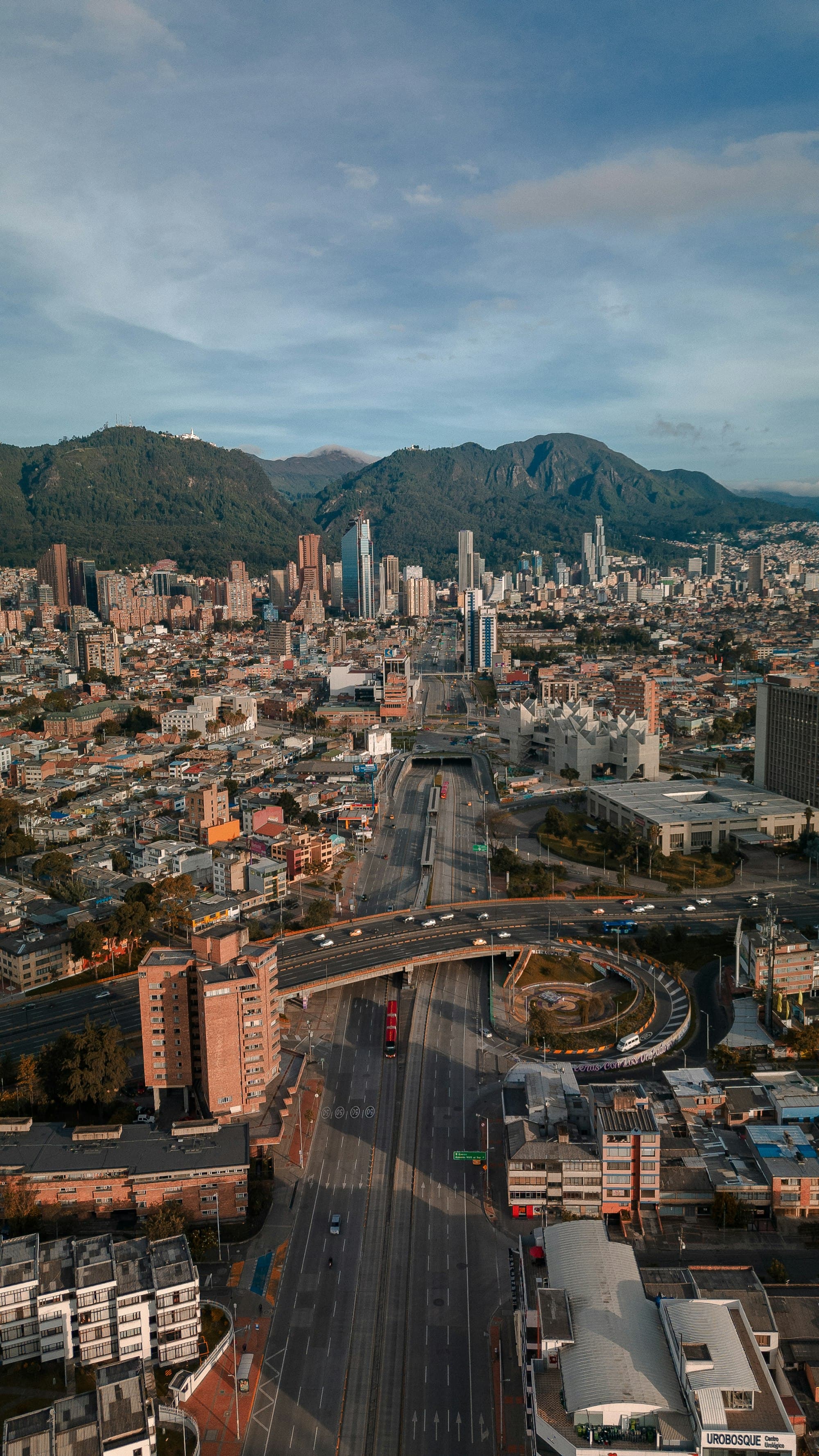
Colombia's growers have belonged to one federation for nearly a century, and the man with the moustache and the mule on the old advertisements was played by the same actor for almost forty years, longer than most marriages. The regions Julian rates for specialty are in the south, in the folds of the mountains. The famous coffee axis in the middle of the country, a landscape of small farms on hills the green of a billiard table, is on the world heritage list, and it grows the volume.
One correction, because a great deal of writing gets it wrong. Brazil is the largest arabica producer in the world. Colombia is the largest producer of mild washed arabica, which is a more specific honour, and the one the country actually holds.
The best Colombian coffee story of recent years is a barista who won the world championship a few years ago using not arabica at all but one of its rare parent species. It tasted, by the accounts I have read, of sweetness and very little else, like sugar water with a memory. Julian has not tried it. Neither have I.
I want to end on the best cautionary tale in coffee, and it is about a label.
Hawaii is the only American state that grows coffee at any scale. It is picked by hand on black lava slopes at an American minimum wage, on farms that average a few acres, by people whose fingers are stained purple by the end of the day. The green coffee sells at the farm for roughly eight times the world benchmark, before anyone roasts it.
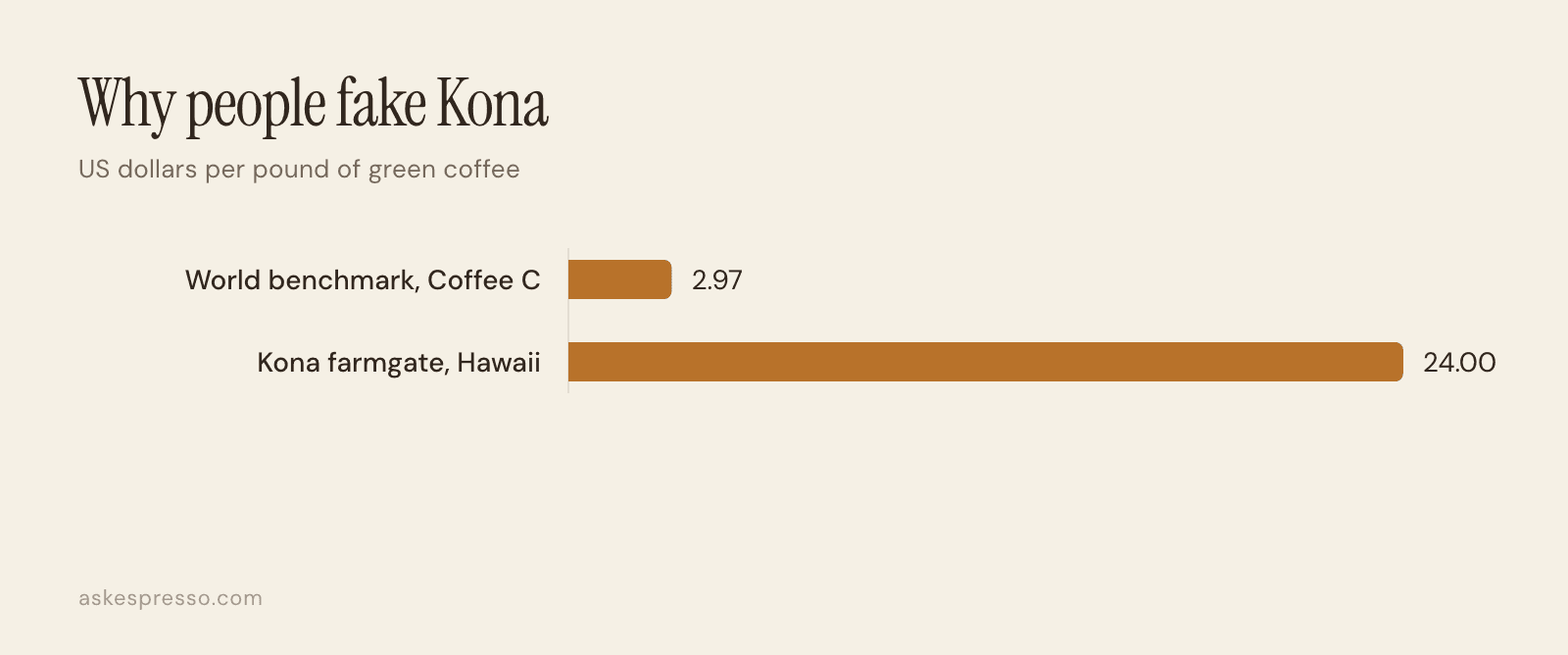
So people faked it. A few years ago the Kona farmers sued the retailers and roasters who had been selling coffee labelled Kona that had almost none in it. The settlements came to millions. One farmer with two acres received a few thousand dollars from a case that had taken years. The law in Hawaii has since been changed to require that a bag labelled Kona actually be mostly Kona, though the requirement takes effect only later in the decade, and a federal law with the same idea followed.
I have colleagues who came from that part of Hawaii. One of them told me, years ago, over lunch, about picking coffee as a child on a family plot and about the exact shade of red that means a cherry is ready, the red of a ripe tomato and not the red of a fire engine. I think about that every time I see a shelf of bags with a Hawaiian name and a price too low to be true. The place is in trouble anyway, with a beetle and a leaf disease and a falling crop, and the fake labels were the least of it.
Here is what I do now, at any counter, in the order I do it.
When was this roasted?
Which farm, or which cooperative?
What variety?
How was it processed?
What did you pay for it?
A good roaster answers all five without being annoyed. A roaster who cannot answer the last one is probably still fine. A roaster who is annoyed by the first one is not, and you should walk out with your money.
If you want a single thing to do this morning, look at the bag in your cupboard and find the roast date. If there is not one, you have already learned the most useful thing in this note. The next question is what the water does, and I did not believe the answer until I moved somewhere it went wrong, and after that comes the grinder, which is where the eighteen dollars should really have gone first.
I bought the bag. It was very good, dark and heavy and a little smoky, the way I like it. The company did not last the year, though we did not know that yet, and I am glad we did not.
The roast date. Not a best-before date, the day it was roasted. Filter coffee is at its best from about one to ten days after roasting, espresso from about seven to fourteen. A bag with no roast date is a bag you cannot judge.
They describe how the fruit was removed from the seed. Washed coffee is pulped, fermented and rinsed, and tastes clean and bright. Natural coffee is dried inside the whole fruit and tastes heavier and fruitier. Honey sits in between, with some of the fruit left on while it dries.
No. Those labels certify farming and trading practices, which matter. None of them says anything about the cup. A roast date and a named farm tell you more about taste than any certificate.
Thank you for spending a little time here.
Back to the journal ↗