The journal.
Things I notice. Things I am still learning.
Opening the journal…
Things I notice. Things I am still learning.
Opening the journal…
Opening the note…
Mar 13, 2022 / Brewing / 9 min read
In the muddy end of a Boulder winter, with the company bleeding and a second child on the way, I bought a capsule machine. What it actually does, what it costs, when it is the right answer, and what a shortcut tastes like.
Boulder, Colorado, March 2022
By Sayonsom Chanda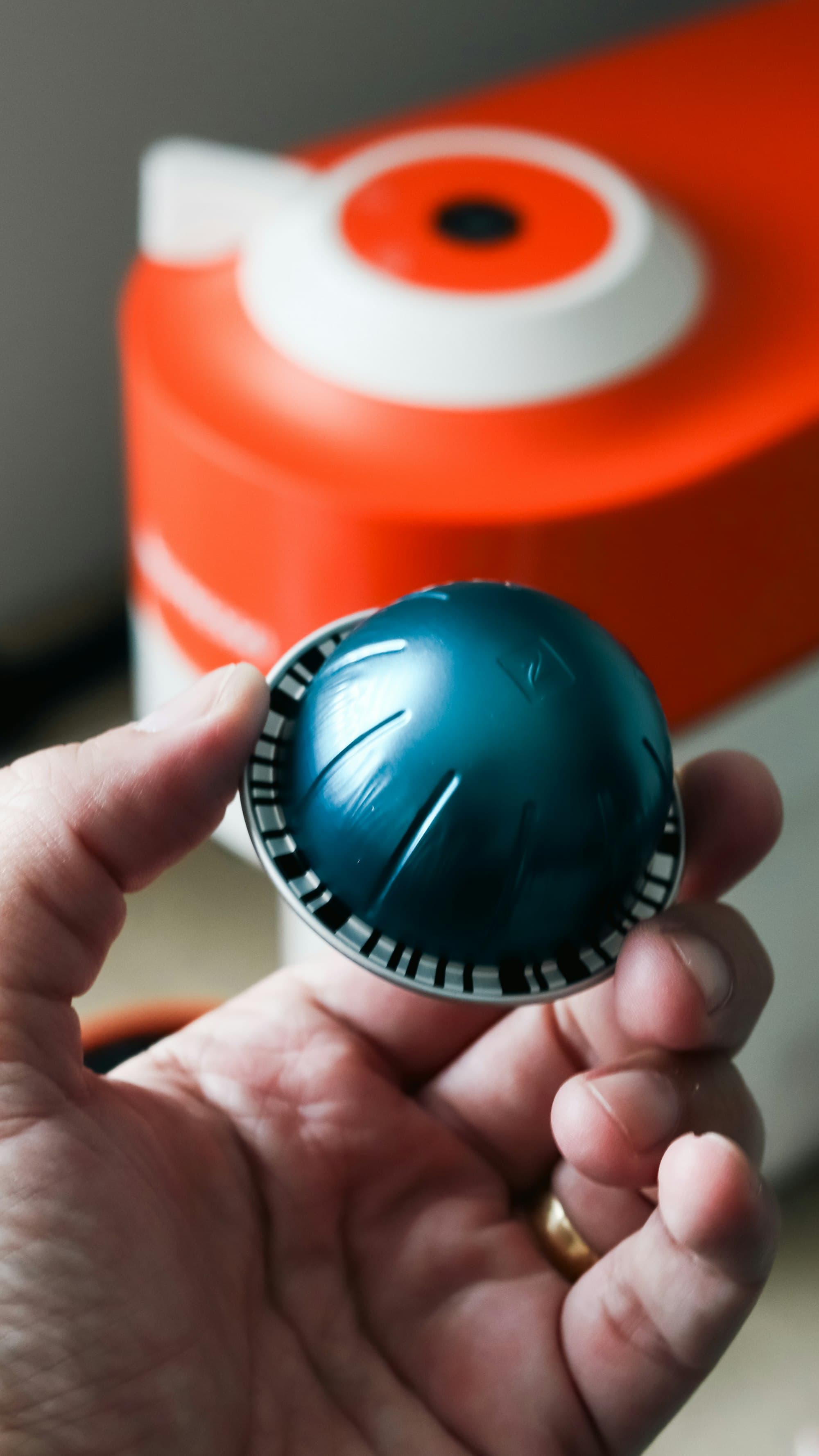
It is the muddy end of a Boulder winter, when the snow along the paths has gone the grey of old chewing gum and the sky cannot decide between March and April, and there is a new box on the kitchen counter. Inside it is a capsule machine. I bought it on a Tuesday night, after the boy was asleep, with the laptop open on one side of me to the company's bank balance and open on the other side to a shop, and I am not proud of the order in which I closed those two windows.
My wife found out a few weeks ago that she is pregnant with our second, due in November. The company is bleeding money the way a cracked mug bleeds coffee, slowly and onto everything. And I, the man who wrote a whole note about extraction, who owns two scales and a notebook, have just bought a machine that makes every decision for me and asks only that I press one button and stand there for ninety seconds while it whirrs like a small drone taking off.
This note is about that machine, and about shortcuts, and about the honest fact that I needed one.
The machine is a Nespresso Vertuo. It is the newer of the company's two systems, the one with the big dome-shaped capsules that make a full mug rather than a thimble of espresso, and I bought it for three reasons, none of them about taste.
The first is time. The mornings have got shorter at the front and the nights longer at the back, and there are days when the ten minutes I wrote about in the first note simply do not exist. The second is noise. The electric grinder sounds like a coin in a washing machine, and a boy of three sleeps ten feet from the kitchen, and by November there will be another one. The third is honesty. I was drinking bad coffee at my desk by eleven every morning because I had made one good cup at five and could not face making another, and a bad second cup is worse than a consistent mediocre one.
I do not know whether a shortcut is always the wrong answer. This spring I have decided that it is not.
Here is the part worth knowing, because the company does not explain it and most reviews do not either.
Each capsule has a barcode printed around its rim, a ring of black and white bars like the ones on a tin of beans. When you close the lid, the machine reads it. The barcode tells the machine how much water to use, how hot, how fast to spin, and how long to wet the grounds before it starts. The coffee is then brewed by spinning the capsule at several thousand revolutions a minute while hot water is injected into it, and the liquid is flung out through the rim by the spin, the way water flies off a salad spinner. The company calls this centrifusion, which is a made-up word for a real thing.
This is different from the older, smaller system, which pushes water through a capsule under pressure the way an espresso machine does, and from every brewer I wrote about in the note on choosing one. It is neither immersion nor percolation. It is a third thing, and the third thing produces a cup with a thick, pale foam on top that looks, from across the room, like crema.
It is not crema. Crema on an espresso is gas held in bubbles by the browning compounds and oils of the coffee, and it is thin and tawny and it tastes of something. The foam on a Vertuo cup is air and gas whipped into the coffee by the spinning, and it is the colour of a cappuccino and the texture of bath foam, and it tastes of very little. I have taken to calling it the wig. The coffee underneath is the coffee. I stir the wig in, or I spoon it off, and I do not feel bad about either.
Consistency, first and above everything. Every cup is the same as the last one, to a degree that no human being with a kettle can manage, because the machine measures the water and the heat and the time and the dose, and the capsule fixes the grind, and the barcode fixes the recipe. I have made the same cup thirty mornings in a row now and it has tasted the same thirty times, which is a strange and slightly lonely experience for someone who keeps a notebook.
Speed, second.
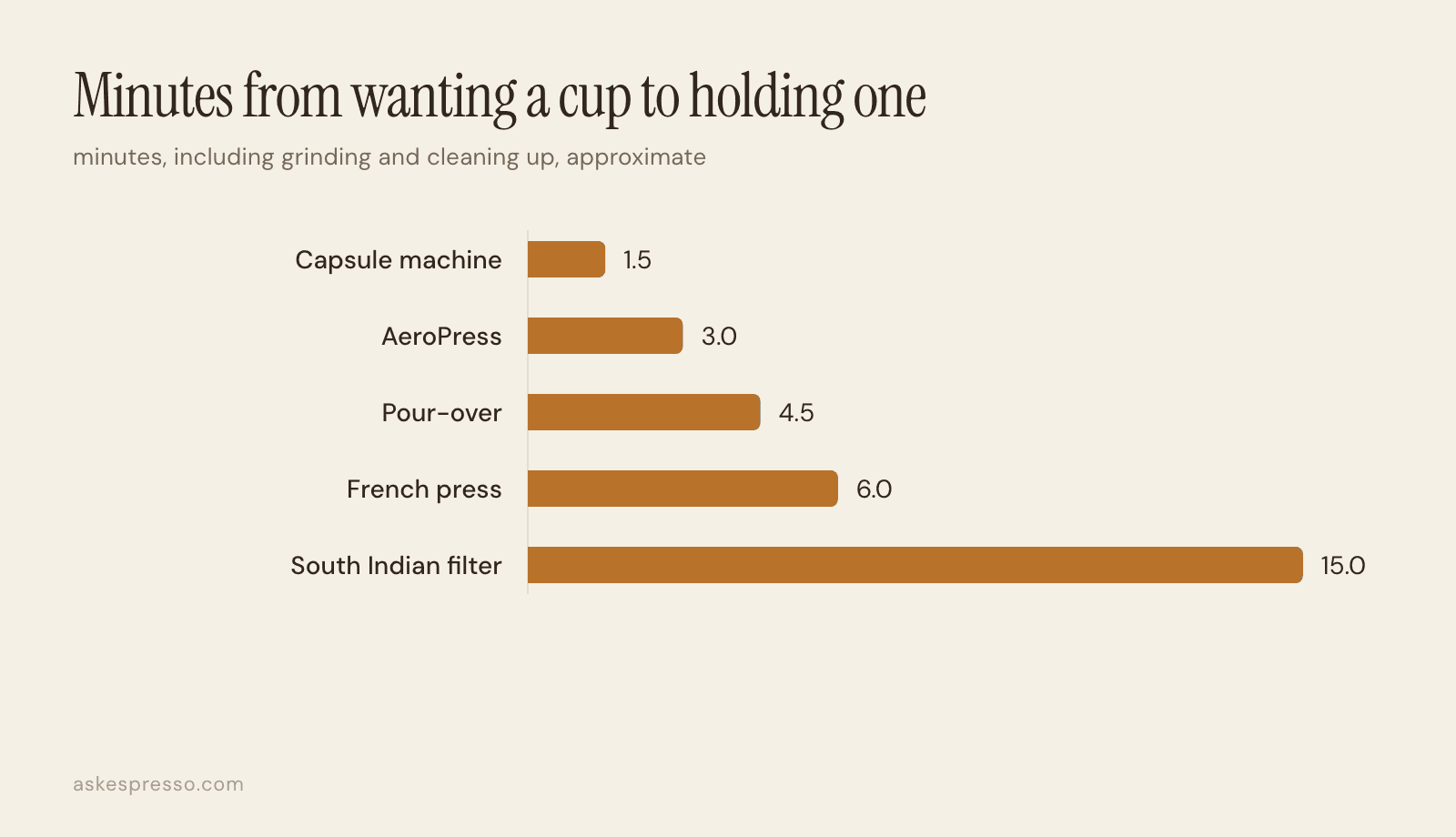
And cleanliness, third, which I underrated. No grounds on the counter, no filter in the bin, no bed of wet coffee to knock out of a portafilter into a box that the boy will find. A used capsule drops into a drawer with a click like a coin in a jar, and that is the end of it.
Freshness, first. The capsules are roasted in a factory months before I drink them, and sealed with nitrogen so that they do not go stale in the way an open bag goes stale, and they still taste, to me, like coffee that has been asleep. The note on roast dates explains why a bean is at its best in the second week after roasting, and no capsule has ever reached me in its second week.
Control, second. There is no dial. You cannot grind finer for a sour cup or coarser for a bitter one. You can choose a smaller cup size, which uses less water on the same capsule and makes a stronger drink, and that is the entire extent of your influence. After a year of learning what the three dials do, handing them to a barcode feels like handing the car keys to a teenager.
The oils, third, and this is my complaint and not everyone's. The spinning whips the coffee into foam and the foam carries the aroma off and up, and what is left is clean and thin and a little tinny at the edges, like a good song through a phone speaker. I love a cup with weight and slick on it, and the Vertuo cannot make one. It can make a cup that is fine.
And money, fourth.

The capsule costs more than good beans and less than the café, which is where it sits in every other way too. I have made my peace with the number by treating it as rent for the ninety seconds, but I want you to see it before you buy.
I have tried most of the range, and I have an opinion, and the opinion is: dark.
The dark roast capsules are the only ones that survive the process. A dark roast has already given up its brightness in the roaster and has the oils and the weight to stand up to being spun into a wig; a light roast comes out of the machine tasting like tea made in a hurry, all edge and no middle. The ones I keep ordering are the dark roast capsules that Starbucks makes for the Vertuo, which arrive from Amazon in boxes every few weeks, and which are, I will admit, a Boulder man's idea of Seattle. They are not as good as beans I roasted on the porch. They are better than every other capsule I have tried, and they are the same on a bad morning as on a good one, and this spring that is the quality I am paying for.
The capsules are aluminium, which recycles well and which the company will take back in a bag you fill and post. I do this. I do not always do this. I am telling you both halves because the second half is the true one for most people, and a machine that makes a small metal cup of waste every morning is a thing to think about before you buy it, not after.
I have thought about this more than the machine deserves, and here is where I have landed.
There is a newborn in the house, or there is about to be, and the grinder wakes people.
It is a shared office, or a guest room, or a parent's house, where nobody will keep beans fresh or a grinder clean.
You are ill, or grieving, or working two jobs, and the choice is between a capsule and no coffee at all, or a capsule and a jar of instant.
You will otherwise buy a four-dollar latte every day at eleven.
And here is when it is the wrong answer. If you have thirty seconds and a hand grinder, the hand grinder wins, and the note on grinders says why. If you have three minutes, the AeroPress wins. If you care about the oils, nothing with a barcode will ever make you happy, and you should know that about yourself before you spend the money.
Since you may have one, or be given one, here is what I have learned in a month.
Run a shot of plain hot water through it first, into the mug, and tip it out. The machine and the mug are both cold, and cold porcelain steals heat from a cup that was never very hot to begin with, as the water note explains for every brewer.
Use the smaller cup size for the same capsule if the coffee tastes thin. It is the only dial you have. Turn it.
Buy dark capsules, and keep them in their sleeve in a cupboard, not in a jar on the counter in the sun, where they look nice and go flat.
Descale it when the light tells you to, and once more when it does not, because the water here is soft and the water where you live may not be, and scale in a machine that measures its own water is a machine that quietly stops measuring.
Empty the capsule drawer and the drip tray every day. I have found things growing in a drip tray that I would not describe in a note about coffee.
Here is the strange lesson, and it is why I am glad I bought it, apart from the sleep.
With every variable fixed, the cup is identical every morning. And that means that every bad cup I ever made with a kettle and a cone, every sour Tuesday and bitter Thursday from the extraction note, was me. The beans were fine. The water was fine. The variable, in the end, was the man holding the kettle. A machine that removes the man from the process is a mirror, and I have been looking into it for a month, and I do not entirely like what I see, and I am grateful for the view.
I do not know how long this machine will stay on the counter. I suspect it will outlast the company, which is not saying much this spring. I suspect that when I finally leave it behind, and I will, because I do not intend to be a capsule man for the rest of my life, I will be sad, and I will be a little ashamed, and both of those will be correct.
For now it hums at eleven every morning, a small drone taking off beside my laptop, and the boy comes to watch the capsule drop, and the cup is the same as yesterday's, and some mornings that is all a person can ask.
If you want one thing to do this morning, and you already own a capsule machine, run hot water through it first, choose the smaller cup, and taste the difference. Then read the note on the grinder, which is where I go next, and where the shortcut ends.
If you need a consistent cup in ninety seconds with no noise and no mess, for a season of your life when attention is scarce, yes. If you have thirty seconds and a hand grinder, no. The capsule costs more than good beans, tastes flatter, and takes every decision away from you, which is both its gift and its price.
It reads a barcode printed on the rim of each capsule, then spins the capsule at high speed while injecting hot water, and the barcode sets the water volume, the temperature, the spin and the pre-wetting. The thick foam on top is mostly gas whipped into the coffee by the spinning, not the oils of an espresso.
The dark ones. Capsules are roasted months before you drink them, and dark roasts survive that wait and the whipping far better than light ones, which come out thin. I drank the dark Starbucks capsules for the Vertuo for two years, ordered in boxes every few weeks.
Thank you for spending a little time here.
Back to the journal ↗